
What Does a Week of Adventure Riding in Cyprus Actually Look Like?
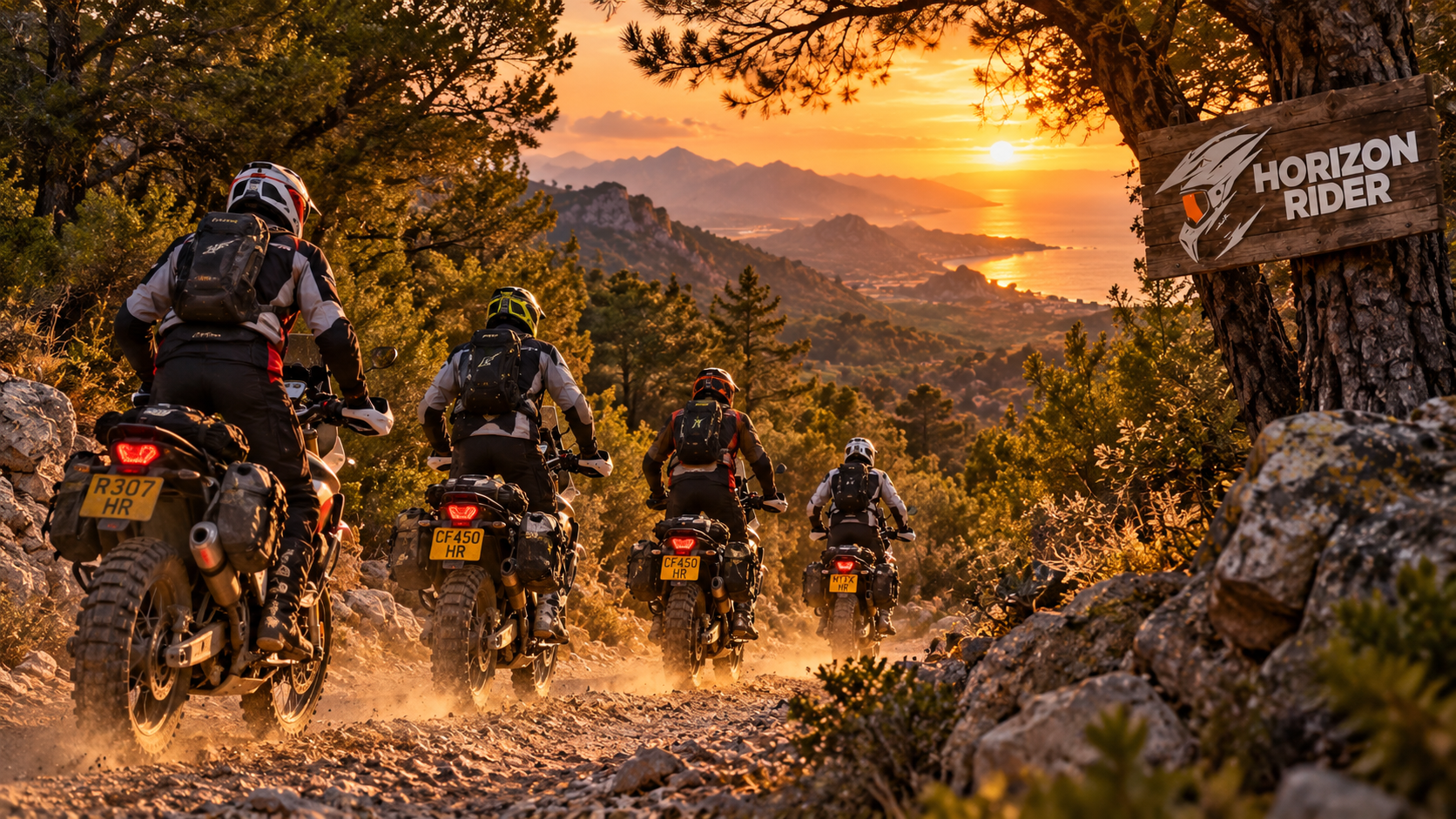
There is something faintly ridiculous about going on an adventure motorcycle holiday and spending half of it packing. Every morning you load everything onto the bike, check out of the hotel and ride somewhere else, only to find the next hotel, unpack everything, check in and repeat the whole performance tomorrow.
There is absolutely nothing wrong with motorcycle touring. I love it. But sometimes I don't want to tour. Sometimes I just want to ride.
And those are rather different things.
That distinction is really what a Horizon Rider week in Cyprus is built around. You have a motorcycle, you have somewhere comfortable to stay, and you have more than 2,100 km of trails available to you. We've dealt with most of the boring bits before you arrive.
What you do with them is largely up to you.
Saturday is deliberately rather boring
You arrive. That's about it.
Most people will have been on a flight, they're carrying riding kit and they've probably been awake since oh-dark-thirty. Nobody needs me standing there enthusiastically suggesting a quick 80 km shakedown ride.
Get to our base, drop your bags and have a look around. Meet the motorcycle that's going to be yours for the week. We'll go through the bike, the navigation, the equipment and the bits you actually need to know, but I'm not going to hold you hostage while I explain the function of every switch.
I will, of course, ask you to whisper in my ear how much you weigh in your gear. If you treat it as a confessional, I can adjust your sag correctly. A sort of “in nomine Patris et Spiritus Sancti” arrangement.
Then stop.
Ride or drive into Polis and find some food. Have a beer. Sit in your garden. Get in the hot tub. Argue with your mates about which direction you're going tomorrow or decide wagers on who's going to be first lying in the dirt. It's up to you.
The adventure can start in the morning.
Then you get to ride
Sunday morning is probably the moment Horizon Rider makes the most sense.
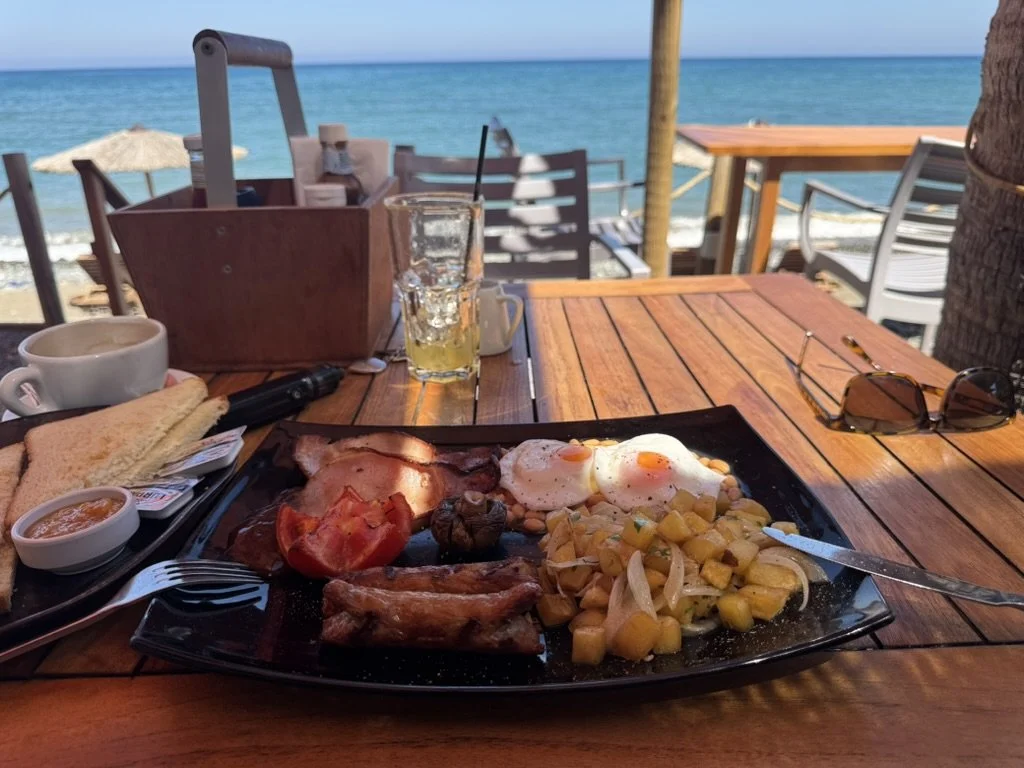
You wake up and your suitcase is still in your room, your clean clothes are still in the wardrobe and, importantly, your toothbrush isn't strapped to the back of a motorcycle. You don't need to check out of anywhere. Outside is a properly prepared adventure bike with the navigation fitted and the HATs GPX files already loaded.
So the question over breakfast isn't “Where is tonight's hotel?”
It's “Where do I fancy riding today?”
That seemingly small difference changes the whole character of the day.
You might decide to head into the mountains, follow the coast or join several HAT sections together into one enormous loop. You might look at something on the map over breakfast and ask “What's that?”
Excellent question. Go and find out.
For a normal day ride you don't need much with you. Water, tools, puncture kit, first aid, phone and perhaps another layer. The bike already carries much of what it needs and everything else can stay at the cottage.
That sounds like a small advantage until you've spent years riding adventure bikes loaded with luggage. A motorcycle without 25 kg of your possessions strapped to the back is simply nicer to ride off-road. It's lighter, it moves better and you move better on it. And when gravity temporarily becomes more persuasive than talent, there's less motorcycle to pick up.
Oh happy days!
There isn't really a standard day
I'm not going to give you an itinerary saying you'll leave at 09:00, reach a scenic viewpoint at 10:17, enjoy an authentic Cypriot lunch at 12:30 and resume your scheduled adventure at 14:15.
Blimey!
That's precisely what we're trying to avoid.
Some days might be 150 km. Some considerably more. And occasionally distance becomes almost meaningless. I've had a 75 km day in Cyprus take 11 hours, and that wasn't because we'd stopped for an eight-hour lunch.
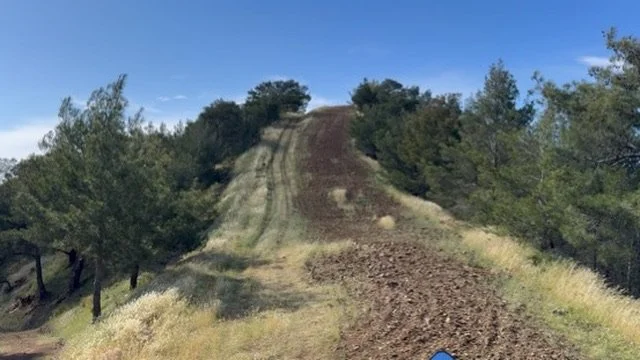
Terrain changes everything. A fast, flowing track can swallow kilometres almost without you noticing, while a rocky climb can make the next kilometre considerably more significant than the previous twenty. A river crossing might deserve a look before committing to it. A wrong turn becomes another wrong turn and, occasionally, something far more interesting than the route you originally intended to ride.
The same applies to stopping. One of my favourite things about exploring Cyprus is arriving in a village at roughly the point your stomach starts making decisions on your behalf. Sometimes there's a taverna, sometimes there's a coffee shop and sometimes there isn't.
This is why I don't want to build your day around a reservation at 12:30. Stop when you want to stop. Eat when you find somewhere you fancy. Have a coffee because the view is ridiculous, or carry on because you're having too much fun to stop.
You're not following a guide, so nobody is waiting impatiently because you've spent fifteen minutes photographing a goat.
It's your day.
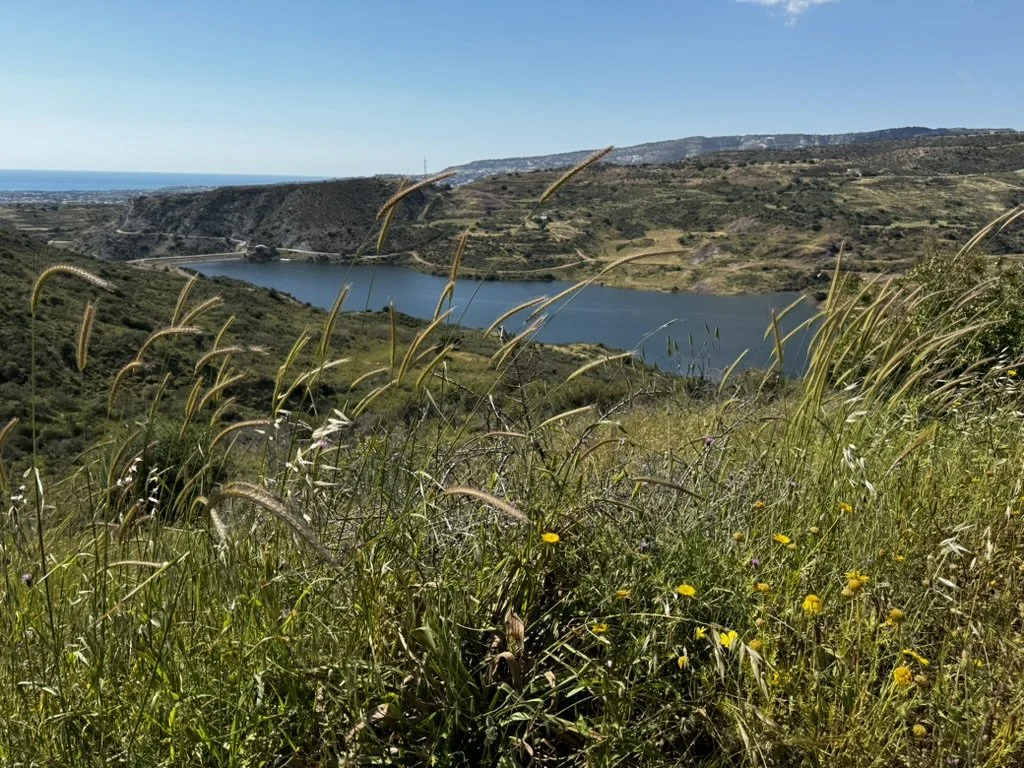
And Cyprus gives you plenty to fill it with. One of the things that still surprises me is how quickly the island changes character. You can be riding through dry, open terrain and not long afterwards find yourself amongst pine trees. Climb higher and the temperature changes. Drop towards the coast and suddenly the Mediterranean appears in front of you.
There are vineyards, orchards, forests, exposed ridges, river valleys, rocky climbs and long flowing tracks where you can simply relax and let the motorcycle move underneath you. It's one of the reasons the HATs are a network rather than an itinerary.
Use them that way.
Plans are allowed to go wrong
In fact, I rather hope they occasionally do.
Not properly wrong, obviously. Nobody wants to spend Thursday afternoon explaining to a recovery driver that the motorcycle is somewhere down there.
But adventure riding without the occasional U-turn would be a suspiciously sanitised affair.
Tracks change. A gate appears. Weather does something unexpected. You arrive at a section and decide that today, on this motorcycle, with your particular level of enthusiasm or skillset, you'd rather not.
Fine.
Turn around and take the alternative. Pick another HAT. Join something else together.
One of the advantages of having a network rather than one sacred line across Cyprus is that there is almost always another way to have a good day. You haven't failed because you decided not to ride something. I've turned around plenty of times myself.
Occasionally wisdom arrives just before traction disappears.
And sometimes the plan goes wrong in a much better way. You spot a track you hadn't intended to ride, follow it because it looks interesting and discover something brilliant. That's how quite a lot of the HAT network was built in the first place.
Then you come home
This part is surprisingly underrated.
After a full day off-road, you ride back to the same place you left that morning. There's no hotel reception, no unloading a week's luggage and no wondering whether you've accidentally booked somewhere with nowhere to dry wet riding kit.
Park the motorcycle, take your boots off, have a shower and put the filthy stuff somewhere sensible. There's a washing machine. There's a garden, barbecue and hot tub. Your ordinary clothes are exactly where you left them, and Polis and Latchi are close enough to go and find dinner without turning it into another expedition.
Then you can spend the evening explaining to everybody why the bit where you nearly fell off was entirely intentional.
Tomorrow morning your bike is waiting again, and there's another part of Cyprus you haven't ridden yet.
That's the basic rhythm of a Horizon Rider week, and I think there's something rather lovely about its simplicity.
Ride all day. Come home. Do it again.
Except you don't actually have to come home.
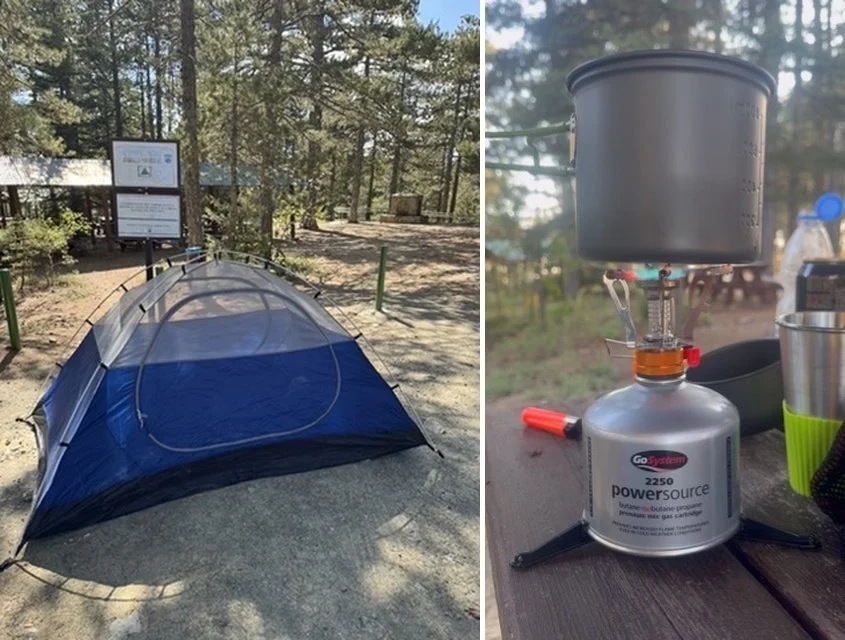
A base doesn't tether YOU
This is the wrinkle I particularly like.
The bikes are deliberately equipped so you can disappear.
If you're doing day loops, take a top bag and leave most of your possessions at The Cottage. But the Rieju can carry 36 litres of luggage in its full configuration and the 450MT 58 litres, and full camping equipment is available — although we don't provide a sleeping bag; there's something unsavoury about the thought of being issued one that's already been used 17 times.
For pretty much everything else, we have you covered.
So if you're halfway across Cyprus on Tuesday afternoon, having a brilliant day, and somebody says “Why are we riding all the way home?”, you don't necessarily have to.
Stay somewhere. Camp. Carry on in the morning. Come back Wednesday, Thursday or whenever your route brings you back west.
Your room is still waiting for you.
That gives you something I think is quite unusual: a base without an itinerary. You get all the convenience of having somewhere to live without having to organise every day's riding around returning to it.
You could spend six days riding enormous loops and sleep at The Cottage every night. You could disappear east for two days. You could change your mind halfway through the week because you've found an area you want to explore properly.
The motorcycle isn't the thing that stops you.
How much will you actually ride?
A normal week could easily put 700–900 km on the motorcycle, but I wouldn't arrive obsessed with a set target.
If you have an extraordinary 100 km day, it isn't somehow inferior to a 250 km day. Remember that 75 km day that took me 11 hours.
Adventure riding has a wonderfully poor relationship with arithmetic.
And if you wake up one morning knackered, your shoulders hurt and somebody suggests popping into town for breakfast and doing absolutely bugger all until lunchtime, that's allowed too.
It's a holiday. There are no prizes, and the trails will still be there tomorrow.
That freedom matters because people have different ideas of a good week. Some riders will want to squeeze every possible kilometre out of six days. Others will want a huge day followed by something easier. Some will want technical riding, while somebody else might happily spend all week flowing along tracks looking at the scenery.
I don't particularly want to decide which one you are.
Self-guided. Deliberately.
Horizon Rider is self-guided.
That isn't a polite way of saying we've forgotten to provide a guide. It's the point.
If you've ridden adventure bikes for years, you probably don't need me riding ten metres in front of you all week showing you where to put your front wheel. And you certainly don't need everybody else's holiday determining when you get up, when you stop for lunch or whether you can spend half an hour staring at a trail wondering if riding down it is a brilliant idea or an exceptionally stupid one.
We've done the other bit.
We've explored the island and built the HAT network. We've prepared the motorcycles, fitted the navigation and loaded the routes. You've got the tools, puncture equipment, luggage, first aid and the other things we'd want ourselves.
If you want advice, ask. I'll happily tell you which way I'd go, where things get interesting, what I'd avoid after rain or which section I think will suit the sort of riding you're after.
Then we get out of the way.
You decide when to leave, where to ride and when to stop. If you spend forty minutes at a junction because somebody in the group is absolutely convinced the tiny track disappearing down the hill “must go somewhere”, that's entirely your problem.
Although, to be fair, that's usually how I find the good ones.
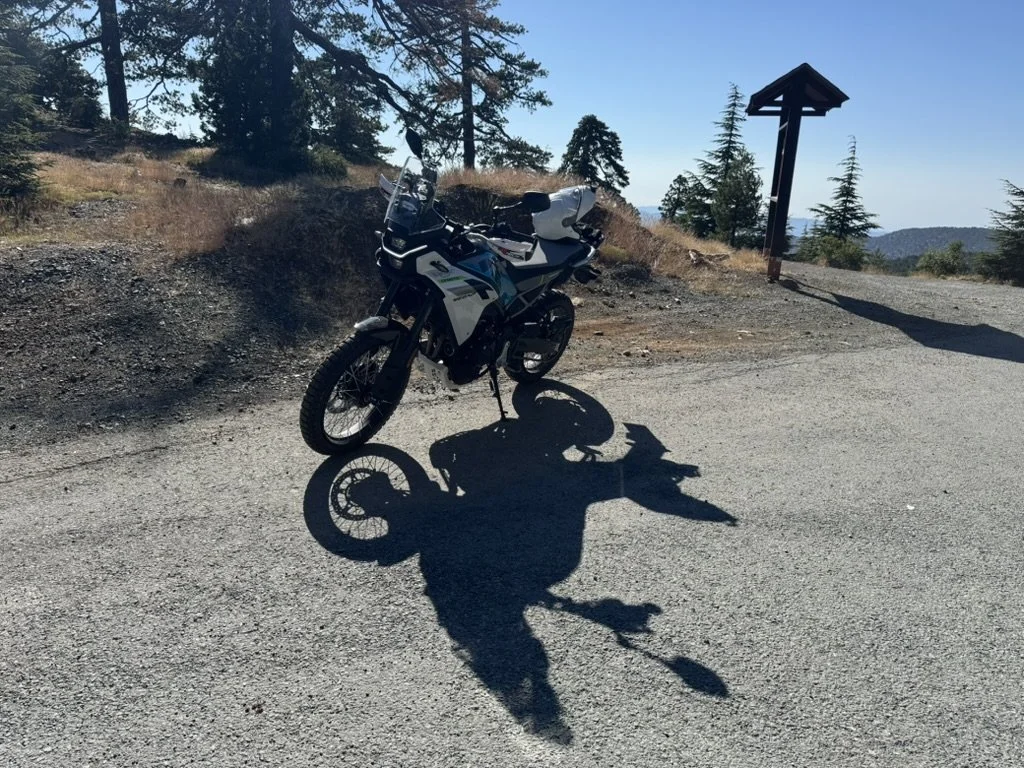
So what does a Horizon Rider week actually look like?
I genuinely hope I can't answer that.
Because if everybody comes here and has exactly the same week, we've rather missed the point.
Perhaps you'll ride six enormous loops and sleep at The Cottage every night. Perhaps you'll disappear east for two days. Perhaps you'll spend a morning fighting your way through something technical and the afternoon cruising easy forest tracks. Perhaps the route you expected to be your favourite won't be, and something you chose almost by accident will turn out to be the best day of the week.
You might ride 700 km. You might ride 900. You might come home every night. You might not.
What I can tell you is what will be waiting when you arrive: a properly prepared motorcycle, a comfortable base, and more than 2,100 km of riding we've already gone to the trouble of finding.
After that, nobody is standing beside you with a clipboard telling you what happens next.
That's your bit.
