
Your Own Adventure Bike Is “Just So”. Why Aren’t Rental Bikes?
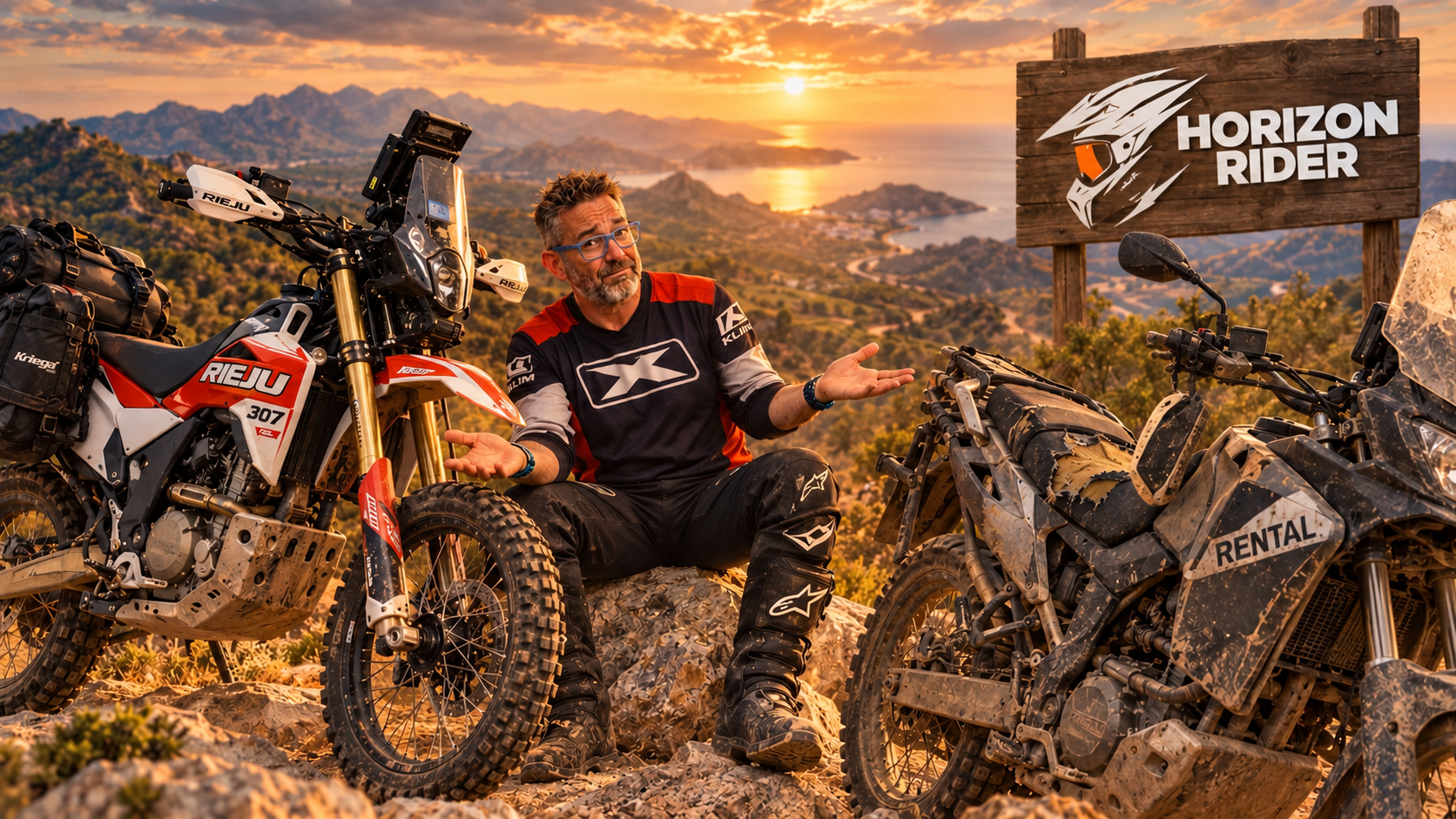
Adventure riders are precious about their motorcycles.
I don’t mean that as criticism. I’m one of them after all.
We spend an absurd amount of time and money getting our bikes just so. The right tyres. Suspension for our weight. Bars where we want them. Pegs where we want them. Gearing that suits the riding we actually do. Protection where experience has taught us protection is required. Navigation exactly where we want it.
We remove perfectly good parts and replace them with other perfectly good parts because the second perfectly good part is, well obviously... better.
Eventually the motorcycle becomes ours.
Then we go on holiday, hire an adventure bike and somebody hands us a factory standard motorcycle apparently set up for a 70 kg rider with no luggage and an unusually optimistic view of suspension preload.
I’ve got that T-shirt and it just doesn’t fit.
I weigh about 95 kg before I put my riding kit on.
This is not going to end well.
That was one of the principles behind the Horizon Rider fleet from the beginning. I can't reproduce the motorcycle you've spent years making yours, but I can try to recreate the thinking that went into it.
I call it the “Just So”.
One job makes life much easier
There is an advantage to preparing a motorcycle for Horizon Rider that even most private owners don't have.
Our bikes have a very specific job.
Your own adventure bike may have to commute to work on Monday, carry a pillion on Saturday, spend six hours on a motorway next month and take you trail riding on Sunday. Every modification involves a compromise because the bike still has to do everything else.
Ours don't.
Our bikes fire up in Cyprus, go adventure riding and come home again. Around 90% of a typical riding week will be spent on the trail, and the island's maximum speed limit is 100 km/h.
That gives us considerable freedom. We can make choices that might be too compromised for somebody's everyday motorcycle because we know exactly what ours are going to spend their lives doing.
That doesn't mean modifying everything for the sake of it. Quite the opposite.
If the standard part works, set it up properly and keep it. If it doesn't, change it.
1. Make it ride properly
Suspension: adjust the bloody thing
The Rieju is a perfect example of something we don't need to modify.
Its standard suspension works very well for what we're asking it to do, so mechanically I leave it alone.
What I absolutely don't do is leave the setup alone.
Every bike gets its sag set properly. Not “that looks about right”. Not “the dealer probably did it”. Measure it and set it properly.
It continually amazes me how many riders will spend thousands modifying a motorcycle and never touch a suspension clicker. They'll replace the exhaust, buy another screen, fit anodised bits that didn't need anodising and spend three evenings on the internet arguing about tyres.
Meanwhile the suspension is still sitting exactly where somebody at the factory left it. Every 450MT I have received has arrived with zero preload dialled into either end. Zero.
Sag and suspension setup can make one of the biggest differences to how a motorcycle actually rides — and most of it is free.
So there are no “that'll do” settings on our bikes.
The 450MT is a different proposition. For the riders and terrain we're expecting, the standard spring rates aren't where I want them, so ours use 7 N/mm Rally Raid fork springs and an uprated rear spring. Then we set the sag and preload properly rather than assuming a change of springs magically finished the job.
The Rieju works. Set it up.
The 450 needs something different. Change it.
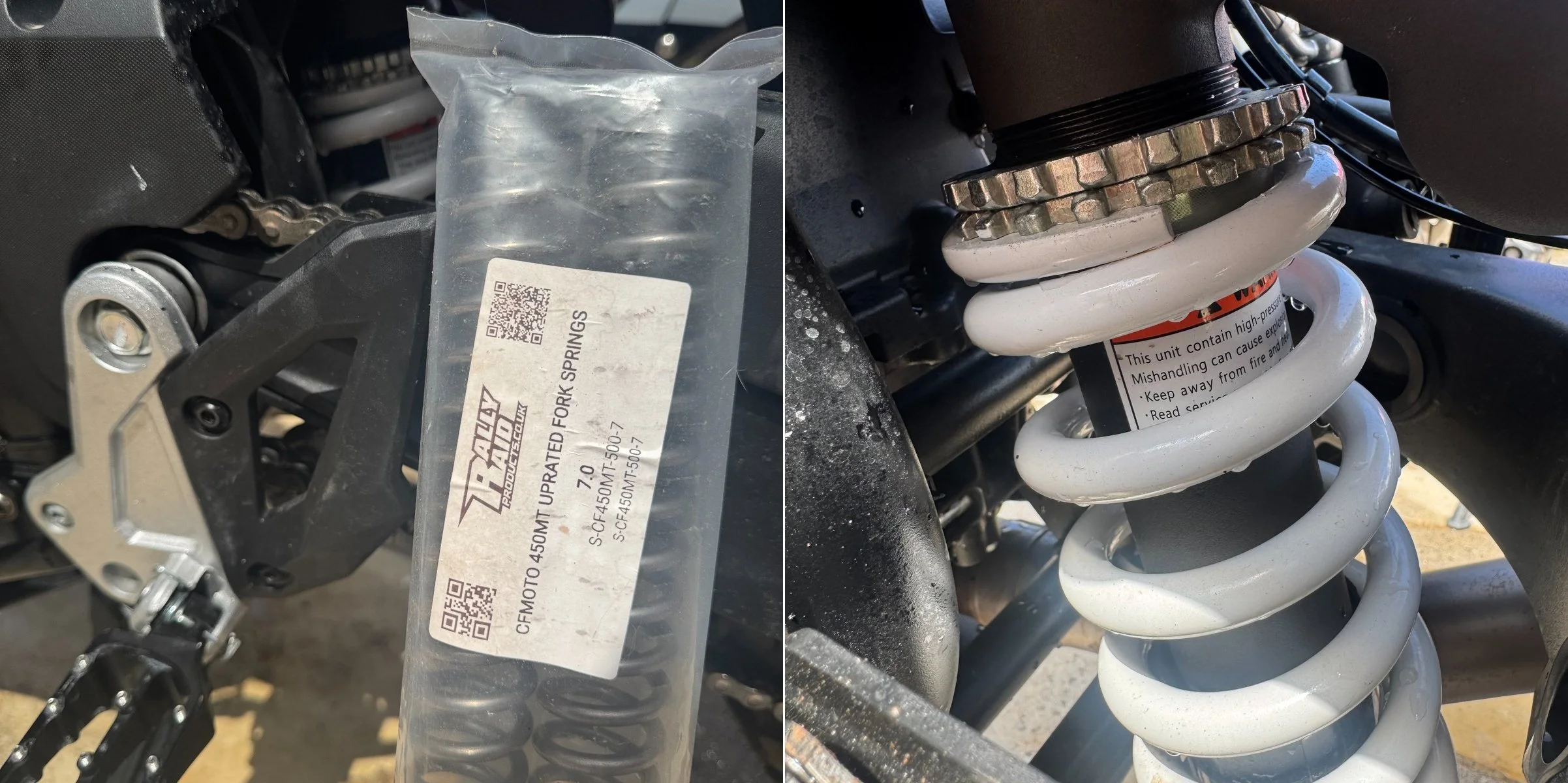
A 95KG rider needs 3.5 turns of preload to achieve correct SAG.
Tyres: because we know where you're going
Tyres are perhaps the best example of what having one job allows us to do.
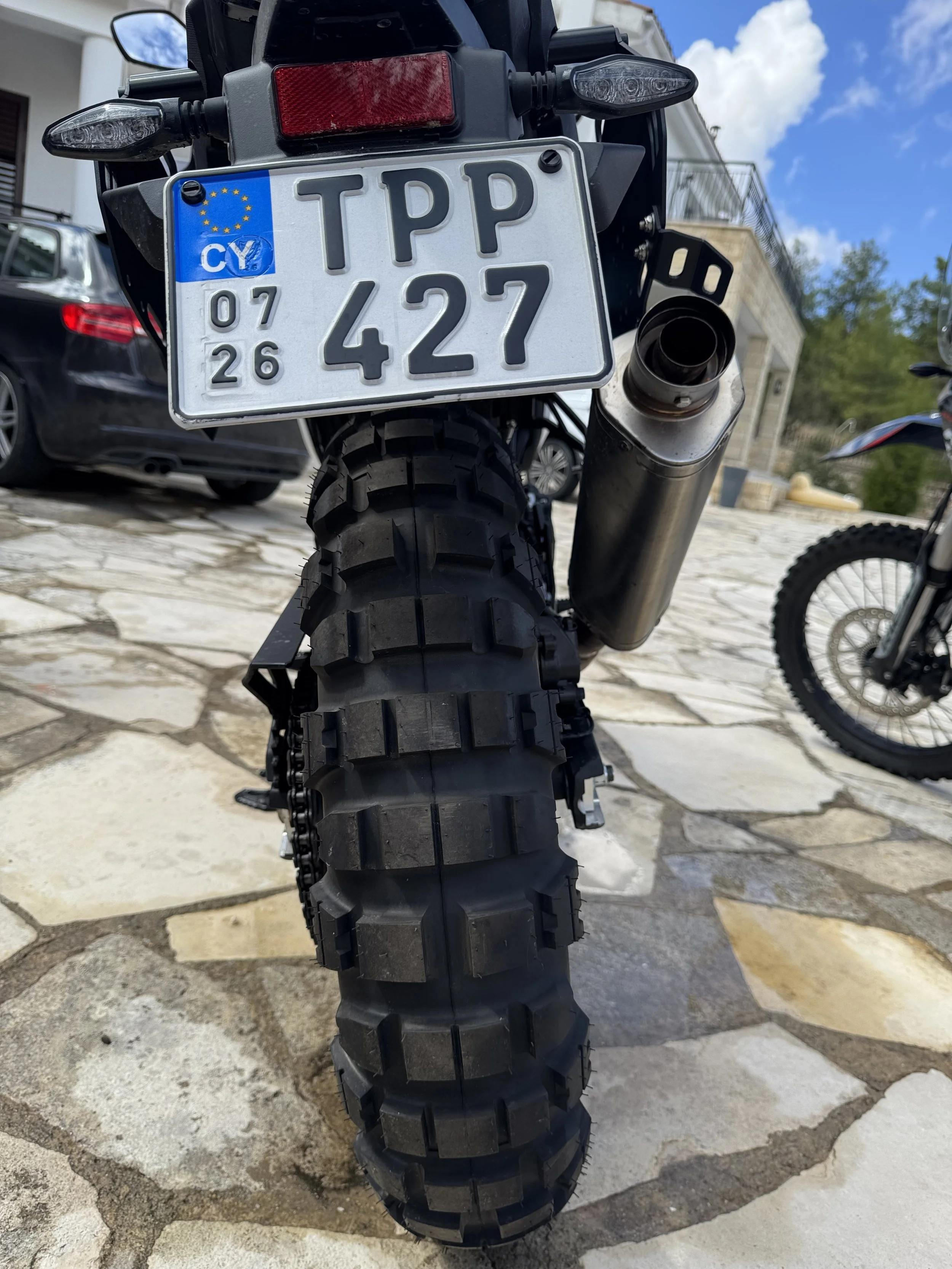
The Rieju runs a Mitas Terra Force, a 90% off-road competition tyre that is still street legal.
That's probably more aggressive than many owners would sensibly fit to their own adventure bike. Their bike also has to commute, tour, spend hours on tarmac and deliver reasonable tyre life.
Ours doesn't.
It has one job.
Take somebody out onto the Cyprus trails and be bloody good at it.
The 450MT has a different job, so it gets a different answer. It's heavier, more road-capable and better suited to covering bigger distances, so it runs the Mitas Enduro Trail XT+. Still properly 80% off-road biased, but a different compromise for a different motorcycle.
“Just So” doesn't mean making every bike the same. It means setting each bike up for what we're actually asking it to do.
Let it breathe, then leave the engine alone
Every Horizon Rider bike has an ECU upgrade and a straight-through exhaust, which sounds suspiciously like I've been chasing dyno numbers.
I haven't.
Mechanically, the engines stay bone stock. These are rental motorcycles. They need to start in the morning, spend all day being ridden properly, come home and then do exactly the same thing tomorrow.
Reliability wins.
What we do change is how the engine breathes and responds. Every bike gets a DNA oiled air filter and straight-through exhaust, while the 450MTs go a step further with a Stage 2 intake.
Crucially, the ECU isn't then given some generic off-the-shelf flash. It's specifically calibrated for the intake and exhaust configuration fitted to that motorcycle.
The objective is torque and throttle response.
Modern Euro 5+ motorcycles have to meet emissions requirements that can produce some pretty annoying fuelling behaviour at small throttle openings. That's understandable when you're homologating a motorcycle for road use. It's less entertaining when you're trying to meter exactly the amount of power you want halfway up something loose and rocky.
On the 450MT we gain around 3–4 bhp.
Lovely.
But the number I'm much more interested in is the roughly 12% increase in torque.
That's something you actually use.
So we improve the breathing, match the ECU properly, get the response and torque we're after and then:
Leave the engine alone.
Gear it for where it actually gets ridden
The 450MT leaves the factory with 14/47 gearing. Ours run 14/50, shortening the overall gearing by a little over 6%.
Normally the first question would be: what have you sacrificed at the top end?
Not much that matters.
A standard 450MT will run to around 151 km/h. Ours will still do roughly 140 km/h if for some reason you really need it to, on an island where the maximum speed limit is 100 km/h.
What we've gained is considerably more useful.
You'll spend roughly 90% of a Horizon Rider week in the dirt. Couple the shorter gearing with the roughly 12% increase in torque and the improvement in low-speed technical riding is enormous.
You have more control and less need to abuse the clutch. The 450 also gets uprated clutch springs, because we're asking rather more of it at low speed than the standard road-biased setup anticipates.
The result is a motorcycle that's simply easier to manage when the trail gets awkward.
I've traded about 11 km/h of top speed that you can't legally use for something you'll appreciate every time the trail gets difficult.
I'll take that trade.
Tyres: because we know where you're going
Tyres are perhaps the best example of what having one job allows us to do.
The Rieju runs a Mitas Terra Force, a 90% off-road competition tyre that is still street legal.
That's probably more aggressive than many owners would sensibly fit to their own adventure bike. Their bike also has to commute, tour, spend hours on tarmac and deliver reasonable tyre life.
Ours doesn't.
It has one job.
Take somebody out onto the Cyprus trails and be bloody good at it.
The 450MT has a different job, so it gets a different answer. It's heavier, more road-capable and better suited to covering bigger distances, so it runs the Mitas Enduro Trail XT+. Still properly 80% off-road biased, but a different compromise for a different motorcycle.
“Just So” doesn't mean making every bike the same. It means setting each bike up for what we're actually asking it to do.
Let it breathe, then leave the engine alone
Every Horizon Rider bike has an ECU upgrade and a straight-through exhaust, which sounds suspiciously like I've been chasing dyno numbers.
I haven't.
Mechanically, the engines stay bone stock. These are rental motorcycles. They need to start in the morning, spend all day being ridden properly, come home and then do exactly the same thing tomorrow.
Reliability wins.
What we do change is how the engine breathes and responds. Every bike gets a DNA oiled air filter and straight-through exhaust, while the 450MTs go a step further with a Stage 2 intake.
Crucially, the ECU isn't then given some generic off-the-shelf flash. It's specifically calibrated for the intake and exhaust configuration fitted to that motorcycle.
The objective is torque and throttle response.
Modern Euro 5+ motorcycles have to meet emissions requirements that can produce some pretty annoying fuelling behaviour at small throttle openings. That's understandable when you're homologating a motorcycle for road use. It's less entertaining when you're trying to meter exactly the amount of power you want halfway up something loose and rocky.
On the 450MT we gain around 3–4 bhp.
Lovely.
But the number I'm much more interested in is the roughly 12% increase in torque.
That's something you actually use.
So we improve the breathing, match the ECU properly, get the response and torque we're after and then:
Leave the engine alone.
Gear it for where it actually gets ridden
The 450MT leaves the factory with 14/47 gearing. Ours run 14/50, shortening the overall gearing by a little over 6%.
Normally the first question would be: what have you sacrificed at the top end?
Not much that matters.
A standard 450MT will run to around 151 km/h. Ours will still do roughly 140 km/h if for some reason you really need it to, on an island where the maximum speed limit is 100 km/h.
What we've gained is considerably more useful.
You'll spend roughly 90% of a Horizon Rider week in the dirt. Couple the shorter gearing with the roughly 12% increase in torque and the improvement in low-speed technical riding is enormous.
You have more control and less need to abuse the clutch. The 450 also gets uprated clutch springs, because we're asking rather more of it at low speed than the standard road-biased setup anticipates.
The result is a motorcycle that's simply easier to manage when the trail gets awkward.
I've traded about 11 km/h of top speed that you can't legally use for something you'll appreciate every time the trail gets difficult.
I'll take that trade.
2. Make it survive properly
Colin Chapman was nearly right
Lotus founder Colin Chapman famously said:
“Simplify, then add lightness.”
I rather like that philosophy, so we start there.
Anything the motorcycle doesn't need for its particular job is a candidate for removal.
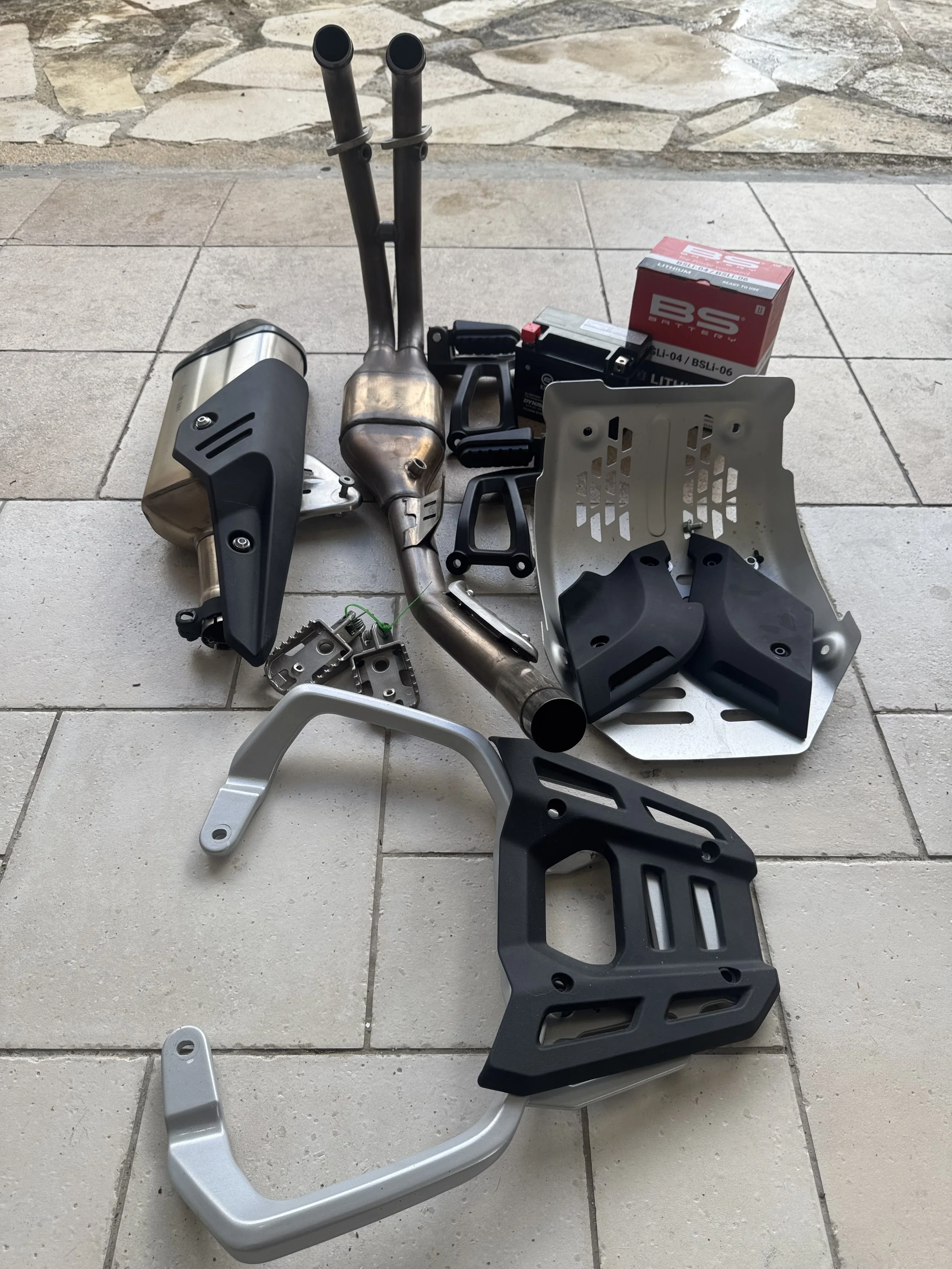
The standard battery is replaced with lithium. The heavy exhaust disappears. Pillion footpegs go. On the 450MT, the enormous standard rear mudguard assembly is replaced with a lightweight tail tidy, and the heavy rear grab handles make way for a simpler, more useful rear handle and proper tie-down points.
The savings add up remarkably quickly. The battery alone is around 3 kg. The exhaust is roughly another 3.5 kg. Pillion pegs are about 1.5 kg. Then there are brackets, handles and assorted other bits whose principal contribution would have been coming along for the ride.
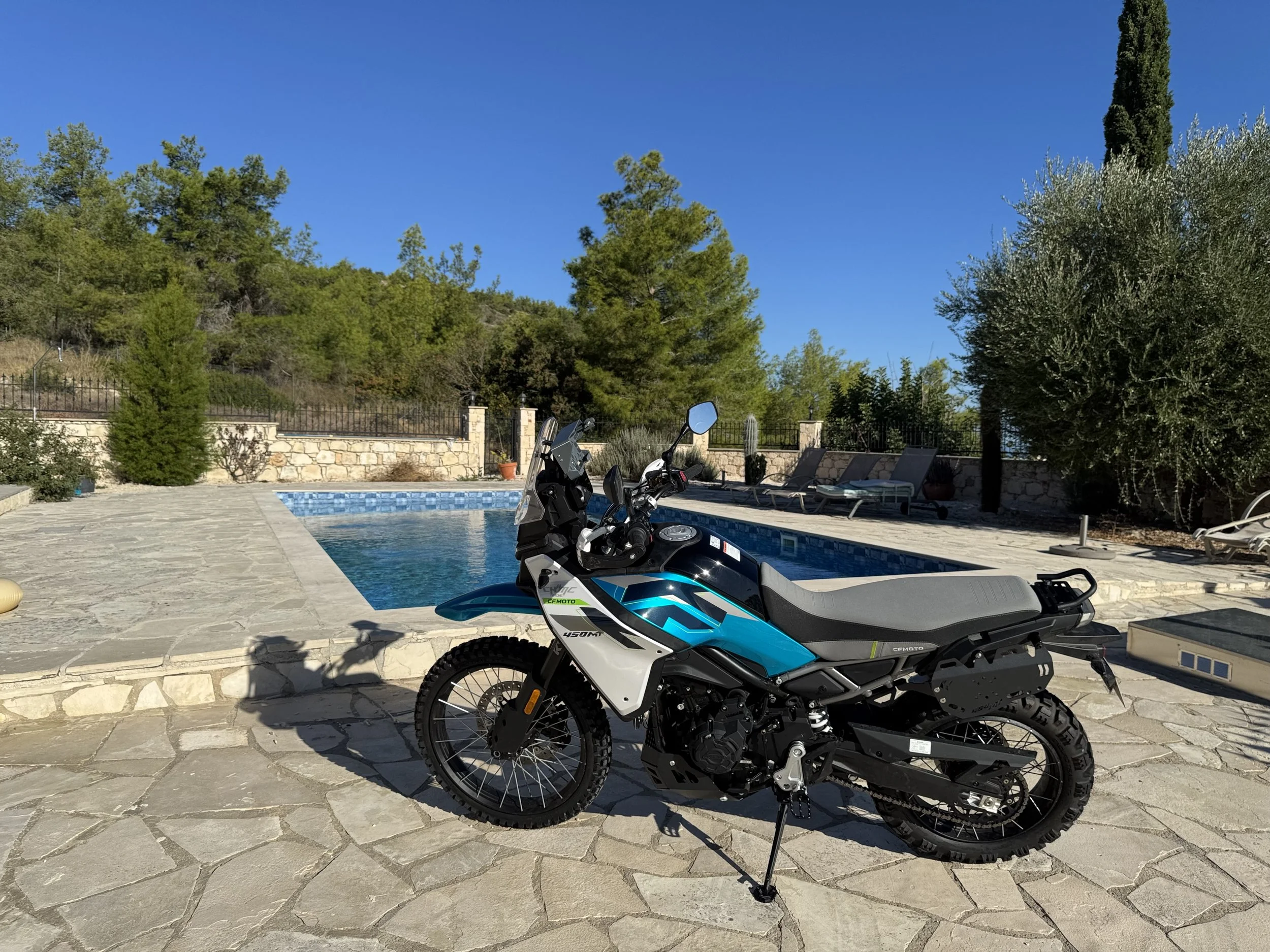
The finished Rieju is around 149 kg. The prepared 450MT is approximately 182 kg wet — although I'll put a completed fleet bike on the scales before getting too precious about the exact figure.
But then I depart slightly from Chapman.
I add some of the weight back on.
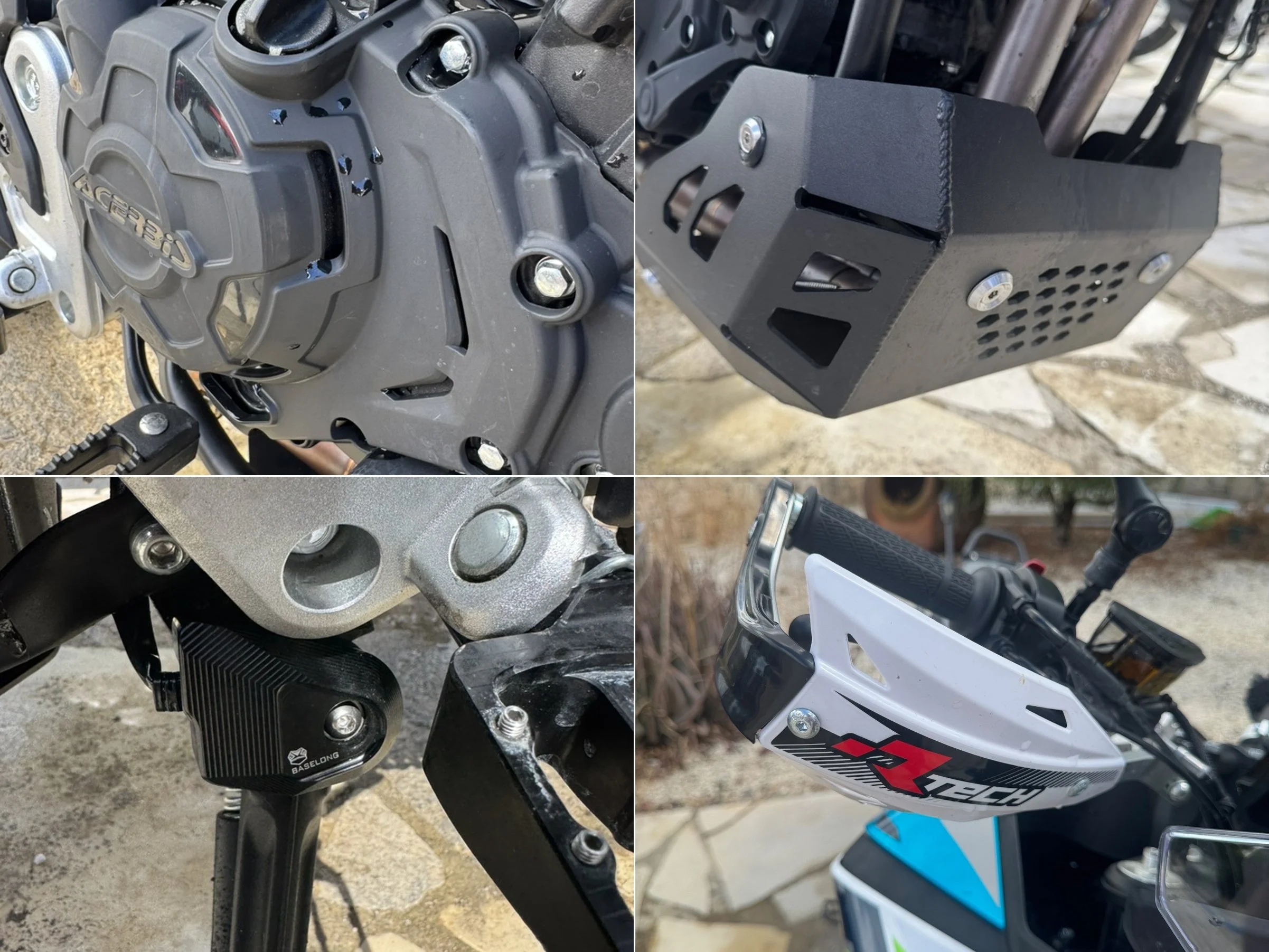
The 450MT keeps its metal luggage plates because they're useful. It gets crash guards, Acerbis engine covers and a beefed-up bash plate. All the bikes get proper aluminium-framed enduro handguards.
Why spend all that effort removing weight only to bolt some back on?
Because weight is fine if it's earned its place.
A pillion footpeg on a motorcycle that isn't carrying a pillion doesn't.
A piece of metal preventing a rock from punching through something expensive absolutely does.
The objective isn't to build the lightest motorcycles possible. It's to remove weight that contributes nothing and spend some of that allowance on things that make the bikes better at their job.
Every kilogram that's still there has been invited and RSVP’d.
Protection that actually protects something
Adventure bikes generally arrive with handguards because adventure bikes are supposed to have handguards.
Unfortunately, some of them appear to be made of chocolate.
They look the part and they'll keep the wind off your hands, but eventually one of our motorcycles is going to fall over.
Probably repeatedly.
So the standard guards come off and we fit proper aluminium-framed enduro handguards. When the bike hits the ground, I'd rather the aluminium frame took the impact than the brake or clutch lever — or the rider's fingers.
Every bike also gets a beefed-up bash plate. Cyprus contains a great many rocks, and some of them appear determined to inspect the bottom of your motorcycle.
The 450MTs add crash guards and Acerbis engine covers.
Then there's the less glamorous stuff.
We even protect the side-stand switch.
Nobody has ever walked around an adventure bike and said, “Bloody hell, that's a lovely side-stand switch protector.”
But knock the switch off on a rock in the middle of nowhere and your perfectly healthy motorcycle can suddenly decide the side stand is permanently down and won’t run in gear.
That can really ruin your day.
Preparing an adventure bike properly isn't just about protecting the obvious expensive bits. It's thinking about the stupid little things that can stop an otherwise perfectly good motorcycle from getting you home.
I don't care whether the protection looks rugged. I care whether the bike still works after it falls over.
We're not making the bikes look more adventurous. We're preparing them to actually have adventures.
3. Make it ready for an adventure
At this point we've got the motorcycle itself where we want it.
But that's only half the job.
The next question is:
What would I put on my own bike before disappearing into Cyprus?
Now, where the hell are you going?
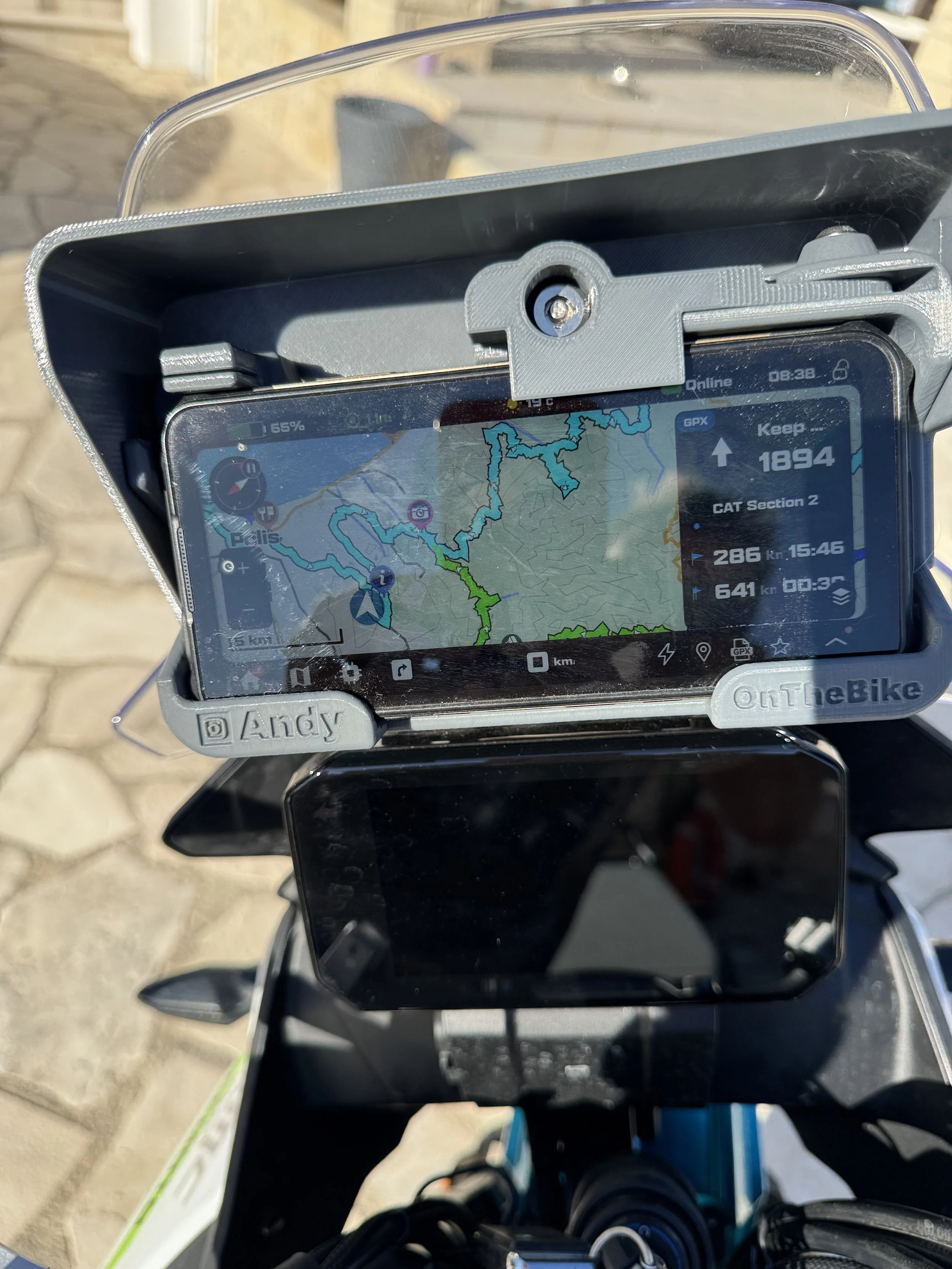
Every Horizon Rider bike has its own rugged navigation device running DMD2, properly mounted and powered on the motorcycle.
This isn't your phone wobbling around in a £20 handlebar clamp.
And you don't need to spend the first morning of your holiday downloading apps, transferring GPX files and wondering why nothing can find the folder you saved them in.
The HATs GPX files are already there.
Turn it on, choose where you want to ride and go.
You'll get the GPX files before you arrive as well. If you're the sort of person who wants to spend three weeks examining every junction before your flight, fill your boots.
If you're not, that's fine too.
The bike already knows where the trails are.
Take the tools that fit the bike
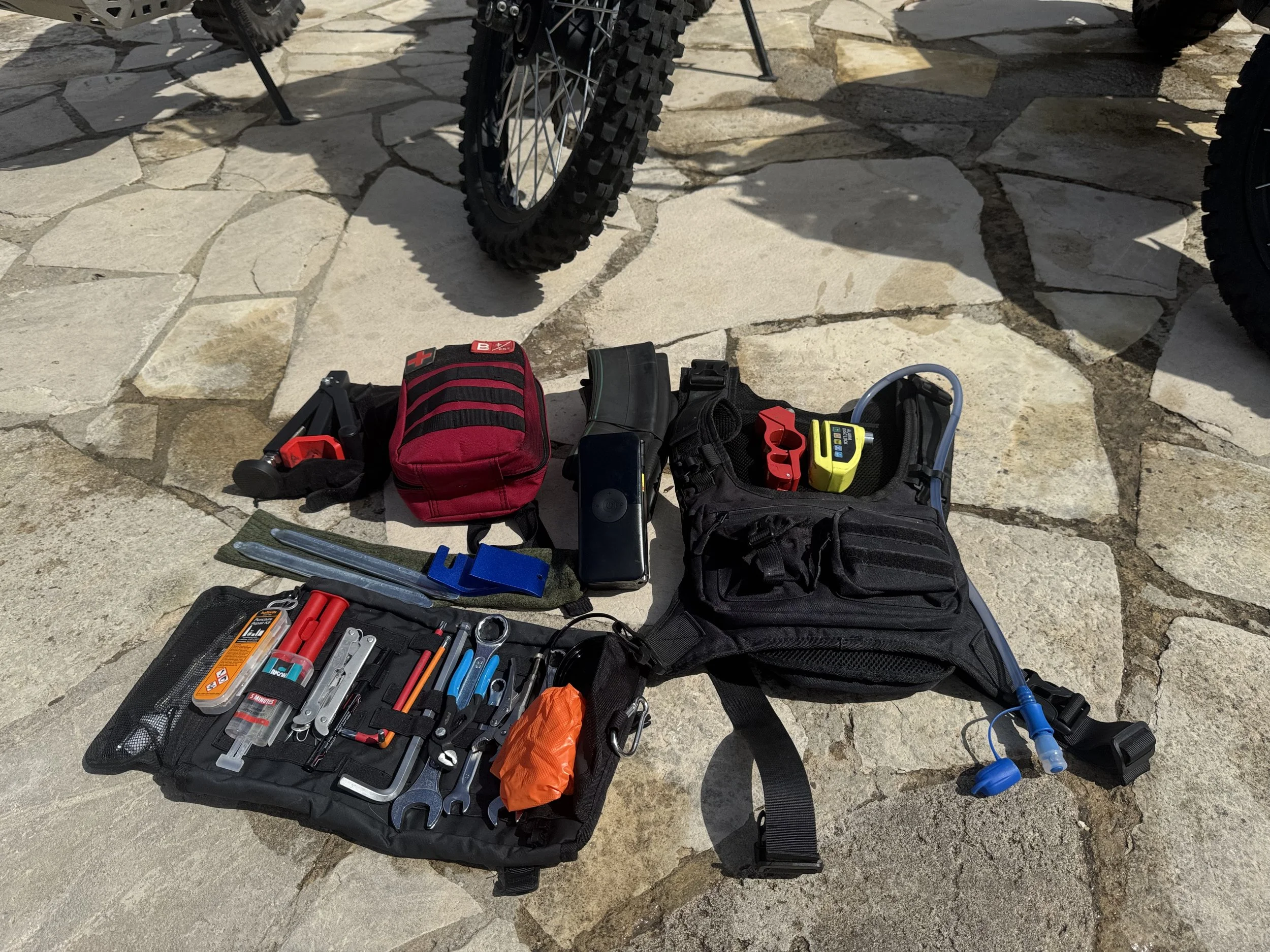
Every motorcycle comes with its own tailored tool roll.
And I mean tailored.
There is absolutely no point giving you a complete set of Torx keys on the Rieju when you can dismantle about three-quarters of the entire motorcycle with a T25 and T30.
So we don't.
The tool roll is configured around the motorcycle it's attached to: the tools you're actually likely to need, rather than a generic bag of metal supplied so we can tick a box marked “toolkit included”.
Then there are punctures.
Every bike carries tyre levers, a compact electric compressor and the appropriate puncture-repair kit.
The Riejus currently run tubes, so they carry patches and a 21-inch heavy-duty spare tube. A 21-inch tube isn't the perfect answer for the rear wheel, but it'll work in either wheel well enough to get you out of trouble and back home.
The 450MTs are tubeless, so their kits carry plugs instead.
When I can get hold of the Tubliss systems I want, the plan is to convert the Riejus to make the setup even more puncture-resistant.
For now, the important thing is that a puncture doesn't automatically become a recovery. You have the tools to get at the problem, the appropriate repair kit or spare tube, and something rather more effective than your lungs for putting the air back in afterwards.
Don't carry a workshop. Carry the things that solve the problems you're realistically going to have.
Carry what you need — or disappear for a week
Having a proper base means you don't need to carry your entire life around Cyprus every day.
If you're riding a giant loop and coming home that evening, take a top bag with what you need and leave the rest behind.
But you don't have to come home.
The Rieju has 28 litres of soft side luggage — 14 litres each side — plus an 8-litre top bag, giving you 36 litres when you want the full setup.
The 450MT gets the same 28 litres of soft side luggage plus a 30-litre top bag, giving you 58 litres in total.
We also provide a comprehensive first-aid kit. Hopefully the most dramatic thing you'll ever do with it is put a plaster on somebody, but proper kit is there if something more serious happens.
It includes a tourniquet, although using that to throttle your mate because he won't stop snoring is specifically discouraged.
Add the camping equipment and the motorcycles are configured so that, if the mood takes you, you can disappear for the entire week.
That's important to me. Horizon Rider isn't supposed to replace one rigid itinerary with another.
If you want six day-loops back to a comfortable base, brilliant.
If you look at the map on Tuesday morning and decide you're not coming back until Friday, the motorcycle shouldn't be the thing that stops you.
Pack light. Pack everything. Come home tonight. Come home next week.
Your adventure.
And when you stop riding it
If you're going to disappear around Cyprus for a few days, sooner or later you're going to park the bike somewhere that isn't our workshop.
Every bike therefore has its own alarm, alarmed disc lock and throttle/front-brake lock.
Is that excessive?
Possibly.
But I'd rather give you three ways of making the motorcycle unattractive to somebody else than have you lying in a hotel room at two in the morning wondering whether it's still outside.
The adventure is supposed to involve wondering where you're riding tomorrow, not where your motorcycle went tonight.
And finally, drink something
This sounds almost too obvious to mention, but we're riding motorcycles off-road in Cyprus.
It's hot.
You need water.
Every rider gets a lightweight back-mounted hydration vest with a 2-litre water bladder and drinking tube, so you can hydrate while you're riding rather than waiting until you're already thirsty enough to stop.
There's also a useful chest pocket for your phone and the little things you actually want within reach rather than buried somewhere in the luggage.
It's hardly the most exciting piece of equipment we provide.
But after several hours riding Cyprus in the sunshine, I suspect you'll appreciate it rather more than another three horsepower.
Just So
I can't make a rental motorcycle feel exactly like the bike you've spent years making yours.
That's impossible.
I don't know whether you like your clutch lever 4 mm lower, whether you swear by one particular brand of grips or whether you've spent three years finding the only seat on Earth your backside will tolerate.
But I understand why you're precious about it.
Because I'm precious about mine too.
That's why the Horizon Rider bikes aren't standard motorcycles with rental stickers on them. They're motorcycles we've ridden, measured, adjusted, modified, protected, simplified and equipped for one very particular job.
Some standard parts stay because they're already good. Some get adjusted properly. Some get replaced. Some get thrown in a box. And occasionally we remove weight only to deliberately bolt some of it back on somewhere more useful.
The test is always the same:
Does this make the motorcycle better at the job we're actually asking it to do?
I can't recreate your “Just So”.
But when you arrive in Cyprus, put your riding kit on and somebody hands you the keys, I want the first few kilometres to tell you something.
Somebody has thought about this bike in exactly the same way you think about yours.
Just So.
